
Metal exposed to high heat in air does not stay clean for long. Oxygen reacts with the surface and forms scale, a brittle oxide crust that thickens over time. Once that scale cracks or flakes off, fresh metal sits exposed and the process starts again. In furnaces, burners and heat exchangers, this steady loss of wall thickness shortens service life and raises the risk of failure.
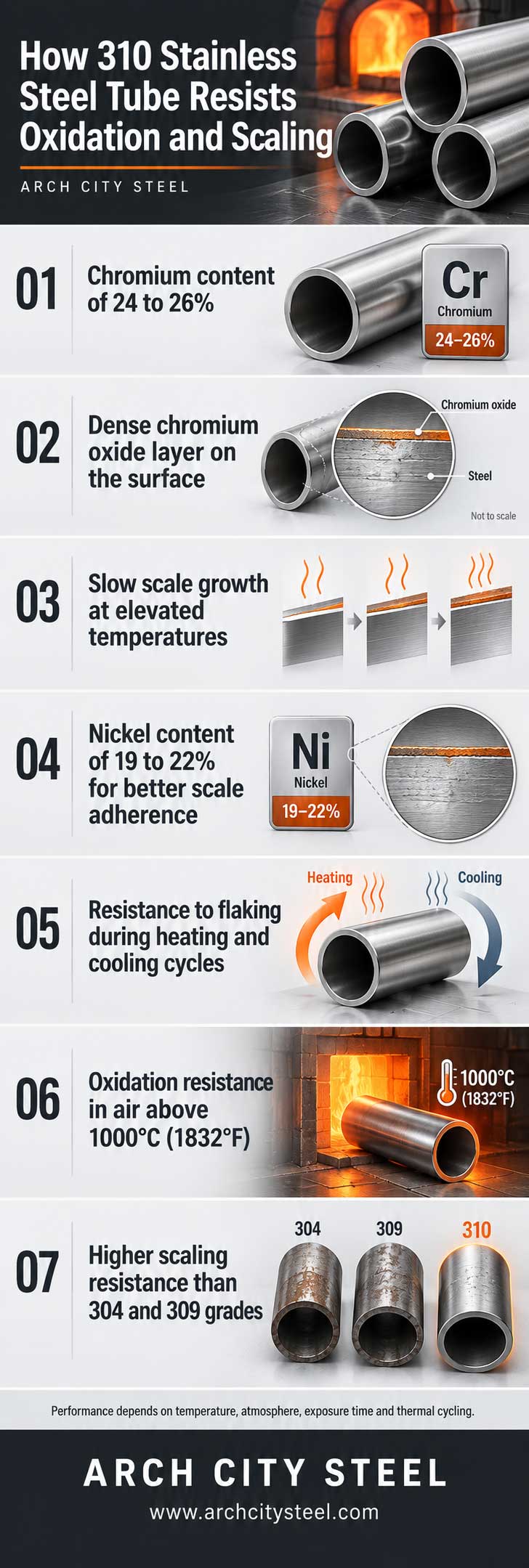
A 310 stainless steel tube handles this problem through its chemistry. With 24 to 26% chromium and 19 to 22% nickel, the grade forms a dense chromium oxide layer that clings to the surface and slows further attack. That layer holds up in air above 1000°C (1832°F) and resists flaking when the tube heats and cools repeatedly. Below is an infographic showing how 310 stainless steel tubes resist oxidation and scaling.