
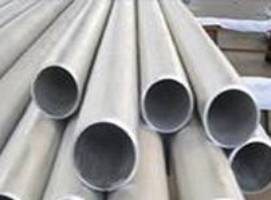
Grade 316 stainless steel tube is the offshore standard because its molybdenum content resists chloride corrosion far better than grade 304. This post covers where 316 fits on a platform and flags spec checks like mill test reports, surface finish, and dual-certified 316/316L that prevent costly failures later.
Key Takeaways
- Grade 316 stainless steel tube contains 2-3% molybdenum, which gives it pitting and crevice corrosion resistance that 304 cannot match in chloride-heavy marine environments.
- The grade covers a wide range of offshore lines including instrumentation, hydraulic tubing, chemical injection, firewater piping, and accommodation systems like potable water and HVAC.
- Pulling the mill test report to verify the actual molybdenum reading matters because heats at 2.0% Mo and 2.7% Mo both meet spec but perform very differently in salt service.
- Specifying dual-certified 316/316L gives welding flexibility with low carbon content, reducing the risk of intergranular attack in the heat-affected zone.
Salt water is not tolerant of materials that do not meet its criteria. One misstep in terms of the tubing used in an offshore platform could result in unexpected maintenance, calls out by helicopters to provide replacements, and paperwork that drags on for several months. Operators find themselves losing days in identifying and fixing leaks rather than producing. This is why material selection is so important even before the first weld is done. Grade 316 stainless steel tube has been standard for offshore and marine operations for years.
Here is how to use it well.
What 316 Actually Brings to Marine Service
316 stainless steel tube belongs to the category of austenitic steels and contains around 16%-18% of chromium, 10%-14% of nickel, and 2%-3% of molybdenum. And it is exactly the presence of molybdenum that makes the difference in that it increases the level of resistance to pitting and crevice corrosion more significantly than 304 does. As such, steel 316 can be used in a chloridic environment while 304 will barely manage to survive in such conditions within several months.
The following standards should apply: A213 for seamless ferritic and austenitic tubing; A269 for general-purpose tubings, which can be seamless or welded; and A312 for pipes.
For welding it is recommended to use 316L that is characterized by an extremely low amount of carbon content, namely no more than 0.030%. Regular steel 316 can contain certain amounts of carbide precipitates in the heat-affected zone of a weld and, therefore, become vulnerable to intergranular attack later on.
Where Does the 316 Stainless Steel Tube Fit Offshore
The grade handles a wide range of lines on a typical platform or vessel:
- Instrumentation and hydraulic tubing on decks and inside modules
- Chemical injection lines for inhibitors and methanol
- Firewater piping where flow is regular, and stagnation is short.
- Accommodation systems, including potable water and HVAC condensate
- Cable trays, brackets, and small-bore process lines
Compressed air, vent lines, and drains in covered areas hold up well too. For instrumentation in salt-laden atmospheres, 316 is roughly the minimum spec most operators will sign off on.
Spec Notes That Save Money Later
Pull the mill test report and check the molybdenum number on every heat. Some mills run at the low end of 316 chemistry, which still meets spec but performs worse in chloride service. A heat reading of 2.0% Mo and one reading of 2.7% Mo are not from the same tube.
Confirm surface finish for instrumentation runs. A 240-grit or better polished finish reduces crevice sites where deposits gather. For tubing exposed to salt spray, electropolishing helps.
On dual-certified 316/316L, you get both carbon limits met. That gives you welding flexibility without ordering two grades. Most operators in marine specs ask for it as standard.
Check the spec against the actual environment, not the general label “marine.” Splash zone, fully submerged, internal piping, and atmospheric service all behave differently. A tube run inside a heated accommodation block is not living the same life as one bolted to the splash zone.
Get it wrong, and the next inspection round finds it for you. Or worse, an unplanned shutdown finds it first.