
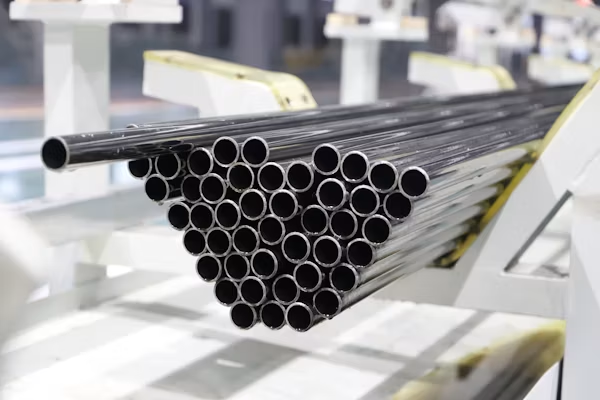
Ask why the 316 seamless tube keeps showing up in precision specs and the answer comes back to one thing, a wall with no seam. Here is where that matters and what bad tubing decisions cost.
Key Takeaways
- No weld seam means one less failure point, and a 316 seamless tube carries none.
- Molybdenum is what stands between the tube wall and chloride attack.
- Smooth bores keep sample lines and instruments accurate.
- Tight dimensional control cuts fitting rework for fabricators.
- Cheap tubing choices show their true cost during unplanned outages.
Nobody plans for a tube to split. The flaw sits in a weld seam somewhere, quiet, until a pressure spike goes looking for it mid-run. Anyone who has cleaned up after that kind of failure reads spec sheets differently. Part of the reason the 316 seamless tube ends up on so many precision procurement lists.
One continuous wall. That is the whole pitch for a 316 seamless tube, and it turns out to be enough. There is no fusion zone corroding out of sight and no weld line an inspector has to keep coming back to. Add molybdenum for chloride resistance and the service intervals start stretching on their own.
What One Continuous Wall Does for Structural Integrity
- Uniform Grain from Billet to Bore: The process starts with a solid billet, pierced hot and drawn out until it becomes tube. Nothing interrupts the grain on the way, which is the point. Stress has nowhere in particular to gather. Welded product performs fine most days, though a seam is still where an inspector’s flashlight goes first.
- Pressure Ratings That Hold under Cyclic Load: Rated pressure means little if fatigue eats into it. Continuous walls handle repeated pressurization cycles without a seam acting as a stress riser. Hydraulic circuits and steam tracing cycle constantly. So do instrument lines. A tube that keeps its rating through thousands of cycles spares the maintenance budget from unplanned repair work.
Where Clean Bores and Tight Tolerances Earn Their Keep
- Smooth Internal Surfaces for Sensitive Media: Instrumentation and sampling systems move small volumes at low flow rates. A rough bore traps residue and skews readings over time. Seamless tube comes out of the mill with a smoother, more consistent inner surface, which keeps sample integrity intact and reduces the cleaning cycles operators have to schedule around.
- Dimensional Consistency across Every Length: A fitting only seals if the tube underneath cooperates. Fabricators know this the hard way. When outside diameter and wall thickness hold steady from one length to the next, compression fittings seat right and orbital welds line up without fuss. Let those dimensions drift and each bad joint eats another hour of shop time.
Systems That Depend on 316 Seamless Performance
- Applications Where Precision Is Non-Negotiable: Corrosion or contamination. Put the question to a maintenance planner and one of those two words comes back almost every time. A 316 seamless tube deals with both at once, which explains its spot on approved vendor lists even where cheaper welded stock sits one phone call away. The usual suspects look like this.
- Chemical injection lines where chloride attack cuts welded tube life short.
- Analyzer tubing that depends on a clean, stable bore for accurate readings.
- High-pressure hydraulic circuits on refinery and offshore equipment.
- Condenser and heat exchanger service in power plants.
The Real Cost of Getting Grade Selection Wrong
- Downtime Math Nobody Wants to Run: An unplanned shutdown at a mid-size processing plant burns tens of thousands of dollars per hour once lost production and expedited freight stack up alongside idle labor. Tubing sits low on the bill of materials and high on the failure consequence list. Saving a few dollars per foot looks different after the first emergency outage.
- Documentation and Traceability That Survive Audits: Mill test reports matter when an inspector asks where a tube came from. Seamless product from established mills arrives with full chemistry and mechanical certs tied to each heat. That paper trail protects plants during audits and gives engineers proof that the material in the rack matches the material in the spec.
Put Proven Tubing behind Every Precision System
Precision systems reward the material decisions made before anything goes wrong, not the scramble afterward. Certified chemistry and a wall without a seam take one variable off the table for good. Speak with a stainless and alloy supplier about grades and current stock, and request a quote before lead times move again.