
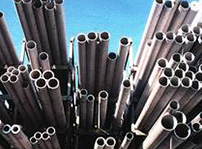
Salt exposure changes what piping has to survive over a service life. 2205 duplex pipe brings corrosion resistance and strength into one material, which trims the shortlist for brackish water and marine systems.
Key Takeaways
- The 2205 duplex grade pipe keeps its surface intact where chlorides chew through 316 grade pipes.
- Warm brackish water raises the odds of pitting and crevice attack.
- Thinner walls become possible on large lines thanks to the higher yield strength.
- Two specifications exist for duplex pipe, and the purchase order needs to say which one applies.
- Somebody should read the mill test report before the material ever leaves the warehouse.
Ask a plant engineer what goes first on a seawater loop and the pump rarely comes up. Piping takes the damage. 2205 duplex pipe ends up in those systems because the alloy was developed for wet, salt-heavy conditions that cut ordinary stainless down years before a replacement line item exists in anyone’s budget.
Most of the decision comes down to corrosion behavior. The 2205 duplex pipe runs about 22 percent chromium with molybdenum and nitrogen added, and that mix puts its pitting resistance number near 35. Chloride performance lands in super austenitic territory. The nickel content stays lower, so the price per foot does not climb the same way.
Chlorides Punish a Careless Grade Choice
- Pitting Starts Out of Sight: Nothing looks wrong at first. Chloride ions break the passive layer at a handful of microscopic points, then spread sideways under the surface until a leak turns up at a weld or a low spot months down the line. Ordinary 316 does fine in mild water. Push the chloride level up and that cushion vanishes.
- Heat Speeds Up the Damage: Warm brackish water in a condenser or a heat exchanger loop moves the reaction along faster. Once chlorides and tensile stress meet at elevated temperature, stress corrosion cracking turns into the failure worth planning around. Austenitic grades stay exposed to it. Duplex, with its two phase structure, holds up better, which is why coastal plants keep specifying it.
Saltwater Systems That Lean on Duplex Piping
- Intake and Discharge Runs: Raw seawater moves through long stretches of pipe at coastal power stations and desalination plants, hour after hour, with no break in the exposure. Engineers call out 2205 duplex pipe for brackish water and marine service because that surface film stays put under constant chloride contact. Replacement intervals stretch. Unplanned outages on those loops drop off.
- Weight Savings on Large Lines: Yield strength comes in at roughly twice what 304 or 316 offers. Designers spend that margin on thinner walls for big diameter runs, which pulls load off supports on offshore platforms and inside pump houses. Pressure ratings stay where they need to be. Crews handle lighter joints, and freight costs follow the tonnage down.
- Ballast and Firewater Lines: Shipboard piping sits full of stagnant salt water for weeks between operations. Crevice corrosion under gaskets and flange faces causes most of the grief in that scenario. Duplex keeps its passive film alive under those conditions, so class survey findings stay short and drydock hours go toward jobs that actually matter.
Details That Decide Whether the Order Arrives Right
- Grade and Specification Have to Match: UNS S32205 and the older S31803 do not share the same nitrogen range, so somebody has to write one of them onto the order. ASTM A790 governs seamless and welded duplex pipe, while A928 applies where welded pipe is made with filler metal. Mismatched paperwork holds up inspection and pushes the tie-in date.
- Before the order goes out, these details deserve a look:
- Confirm whether the pipe is seamless or welded, because the manufacturing route changes which specification applies.
- Outside diameter, wall thickness and schedule should be checked against the piping class sheet.
- Mill test reports need to show ferrite balance and chemistry inside the grade limits.
- Bevel, plain or threaded ends affect how the joint fits up at the site.
- Sour or mixed service may bring NACE MR0175 into the requirement list.
- Welding Procedures Are Not Interchangeable: Heat input control is what keeps ferrite and austenite close to balanced through the weld. Procedures written for austenitic stainless do not carry over, and the weld metal shows the difference under testing. Ask the fabricator for qualified duplex procedures before material lands, because rework on installed pipe costs more than the pipe.
Piping Choices That Hold Up Season After Season
Chloride service rewards whoever slows down long enough to check the details. Match the grade, the specification and the dimensions to the water chemistry on site, and the piping stops being the part everyone worries about. Reach out for stock availability and specification support before the next requisition goes through purchasing.