
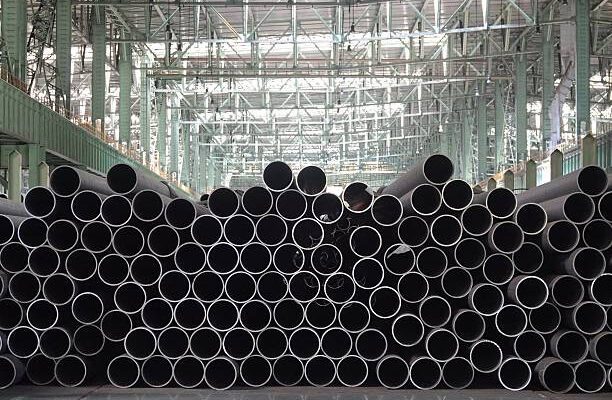
Industrial operations in harsh environments demand the use of materials that perform predictably over extended service periods without unexpected failures or costly downtime. Nickel alloy 201 tubing stands out in applications where corrosion resistance and mechanical stability directly impact operational continuity. This material choice reduces total cost of ownership through fewer replacements and minimal maintenance interventions.
Plants processing caustic materials benefit significantly from the use of nickel alloy 201 tubing because it maintains structural integrity where standard metals fail prematurely. The alloy’s resistance to alkali attack ensures pipelines and heat exchanger tubes operate reliably for years without degradation. This translates to predictable budgeting and reduced emergency repair scenarios that disrupt production schedules.
Superior Performance in Chemically Aggressive Industrial Environments
- Caustic Processing Environments Demand Unwavering Material Performance: Chemical plants handling sodium hydroxide and potassium hydroxide solutions rely on this tubing material to prevent catastrophic leaks that could endanger workers and halt operations. The pure nickel composition resists attack even at elevated temperatures and high concentrations. Operators report service lives exceeding fifteen years in applications where stainless alternatives corrode through within eighteen months.
- Food Grade Applications Require Absolute Material Integrity: Dairy processing facilities and beverage production lines use this tubing for sanitization systems that repeatedly expose metal surfaces to strong cleaning agents. The material withstands steam sterilization cycles without developing pitting or crevice corrosion that compromises hygiene standards. Maintenance teams appreciate the absence of unexpected failures during critical production runs when replacing contaminated batches would cost hundreds of thousands.
Proven Stability Across Extreme Temperature Ranges
- High-Temperature Stability Prevents Costly System Failures: Furnace atmospheres and heat treatment operations subject tubing to thermal cycling that causes many materials to crack or deform over time. This nickel alloy maintains dimensional stability and mechanical properties through repeated heating and cooling sequences. Engineers specify it for thermocouple protection tubes and radiant heating elements where failure would require complete system shutdowns lasting days.
- Cryogenic Service Reliability Protects Critical Operations: Facilities handling liquefied gases operate at temperatures where ductile-to-brittle transition becomes a critical concern for conventional tubing materials. The face-centered cubic crystal structure of this alloy prevents brittle fracture even at temperatures approaching absolute zero. Consider these proven applications across industries:
- Liquid nitrogen transfer lines in pharmaceutical manufacturing maintain leak-free operation for decades without stress cracking.
- Helium liquefaction systems rely on this tubing to prevent catastrophic failures that would vent expensive cryogenic fluids.
- Oxygen service applications benefit from the material’s inherent cleanliness and resistance to ignition under pressure.
Long-Term Economic Benefits Through Extended Service Life
- Reduced Replacement Frequency Transforms Operating Budgets: Manufacturing plants that switched from austenitic stainless steel to this nickel alloy document replacement intervals stretching from three years to twenty years in moderately corrosive service. The upfront material cost premium pays back within the first extended service cycle through eliminated labor expenses and avoided production losses. Financial controllers recognize these savings when calculating return on investment for capital improvement projects.
- Predictable Maintenance Scheduling Eliminates Crisis Management: Operations managers gain the ability to plan maintenance activities around production schedules rather than responding to emergency failures. Inspection data shows gradual, uniform corrosion rates that allow accurate prediction of remaining service life. This predictability enables just-in-time ordering of replacement components and coordination with planned outages, eliminating premium costs associated with expedited shipping.
Securing Operational Continuity Through Strategic Material Selection
Specifying this tubing material represents a strategic decision to prioritize long-term reliability over short-term material savings. The documented performance history across diverse industrial applications confirms its ability to deliver consistent results where failure carries severe consequences. Request detailed specifications and application engineering support to determine if your operating conditions align with this material’s proven capabilities.
Featured Image Source: https://media.gettyimages.com/id/2211110202/photo/seamless-steel-pipes-are-photographed-at-a-steel-enterprise-in-yantai-shandong-province-china.jpg?s=612×612&w=0&k=20&c=56LUayJzOUQjlH9r3Z6bssD2cB-sRLDc8gH6zTujrbA=