Stainless steel remains one of the most widely specified materials across construction, manufacturing, food processing, and engineering industries due to its exceptional strength, durability, and resistance to corrosion. Selecting the correct grade of stainless steel for a given application is critical to ensuring long term performance, structural integrity, and compliance with industry standards. Among the many available grades, one stands out as the most versatile and commonly used across a broad range of sectors.
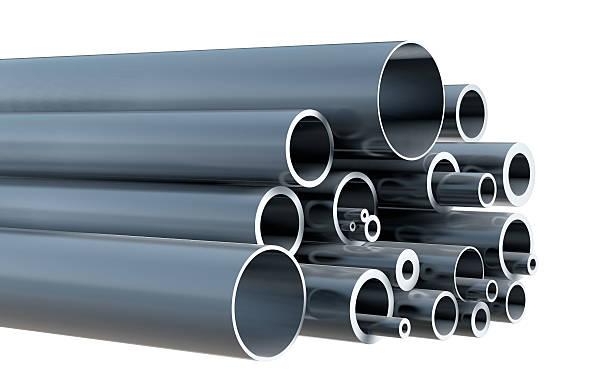
304 stainless steel tube is the most widely used austenitic stainless steel grade in the world, offering an outstanding combination of corrosion resistance, weldability, formability, and mechanical strength suited to demanding environments. Specifying 304 stainless steel tube for pipework, structural frameworks, food grade equipment, and architectural applications ensures materials meet the high performance and hygiene standards required across regulated industries. Metallurgical research consistently confirms that grade 304 austenitic stainless steel delivers superior resistance to oxidation and chemical exposure compared to standard carbon and low alloy steel alternatives.
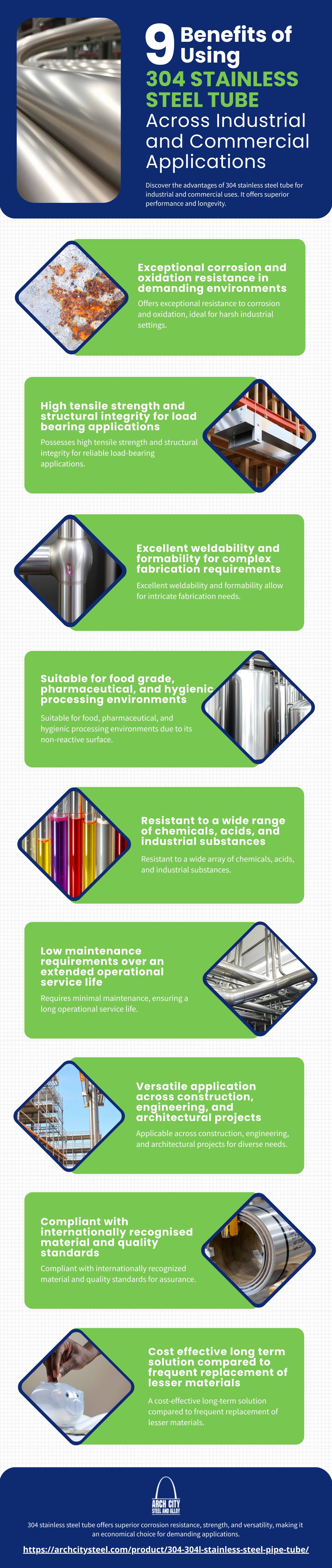
Choosing 304 stainless steel tube for industrial, commercial, and architectural projects ensures reliable long term performance, reduced maintenance requirements, and excellent value across the full service life of the material. Below is an infographic outlining nine key benefits of specifying 304 stainless steel tube for professional applications.